Related Posts Widget for Blogs by LinkWithin

Monday, July 02, 2012

Sweet & Crunchy Walla Walla Pearl Onions


Being a casual dabbler in the home-gardening front, I periodically ask myself why do I want to grow what I am planting in my garden right now? Why this plant vs. that (for the annuals)? And there is usually no logical answer.

Some are my favorite (eggplant, chilies, green beans) and usually work out cheaper if successfully grown at home, some just don't grow in the native soil and weather, and some others (like tomatoes) I can them for the winter months knowing it is organic, pesticide-free.


Although potatoes and onions are dirt cheap almost year round, I still love the onions in my garden. And this is why:

  1. it is the Walla Walla variety, which is less pungent, mildly sweet, crisply fresh and a bit more expensive than the regular yellow onions;
  2.  I get to pick them young as Pearl Onions (not the true pearl onion variety, of course) and savor them in many recipes (Pearl onions can get quite expensive in my local markets); 
  3. plus there's always plenty of scallions for garnish.


We've been harvesting the onions from the garden since last Spring, replanting some, saving the seeds from some and so on. The 7-year-old at home usually likes this job - to dig up onions from the garden - as long as I set the limit, say, "Fill up this basket" or "Get about 20 onions" or something specific.

When the onions refuse to grow, I guess it will be time to give up this addiction to the Sweet & Crunchy Walla Walla Pearl Onions and move on.

One of the recent batches became a delicious jar of pickled onions - vinegar, salt, a hint of sugar, some black pepper and dried red chilies: boil for about 5 minutes, cool and store in the fridge.


Labels: , , ,

Wednesday, August 03, 2011

Home-Garden Summer Squash, Chards, and Pearl Onions Curry


It would be nice if I had the help of a gardener, somebody who knows what they are doing when it comes to growing plants. As it happens, I am an urban farmer at heart with nothing other than passion to support this fantasy. I lack the stamina or the knowledge to sustain vegetable gardening, even if the weather permits. Which it doesn't where I live. So, I make the most of the few months from April to September, knowing that a greenhouse is out of my limits for now.

Thanks to wonderful nurseries around town (one just around the corner from my house), I do get to plant some favorite vegetables and watch them grow. If harvesting the weed-like oregano and mint and fennel and rosemary and lavender from the garden gives me pleasure, it makes me ecstatic to get the squashes and green beans and eggplants and chards and lettuce and onions from the home garden.

Over the years, many simple and surprising recipes have come out of the home-garden harvest. I cannot imagine life without composting. Kids, thanks to support from their school, are well aware of organic waste and remember to dispose of it in the compost bin in the kitchen, which dutifully gets emptied into the Earth Machine in the backyard.

A big question I was asked when I was a newbie home gardener was whether it was worth it? It is hard to answer that question. Obviously depends on what we mean by "worth it". The effort vs. the cost is probably the topmost factor people like to weigh. And, home gardening is a lot of work, especially if doing it yourself.

Over the years, considering what it has offered in terms of intangible lessons and returns, I'd emphatically say it is well worth it. Knowing how plants grow, where our food comes from, how to care for the earth - composting, recycling - plant diseases, interdependence of nature's creatures, soil nutrition, harvesting, bugs and their role in the garden are at some level hands-on for the kids, allowing me to learn a lot in the process.

We still have to buy vegetables from the markets as we are not entirely sustained by our garden and we do visit the local farms for fresh produce on and off, so it is not like we are self-sufficient with a teeny patch of backyard garden.

I am rambling... back to the recipe. It came about as I went into the garden one evening and noticed the few vegetables that were more than ready to be harvested - summer squash, about 3 dozen little pearl onions and several large leaves of chards.


Mint, fennel and rosemary fresh from the garden gave the herbal base for this recipe. Some store-bought Rogan Josh Curry paste and Kashmiri Masala Paste gave the rich, spicy sauce base for the curry. Serve with brown rice, roti or naan.

Simply simmer together till vegetables are just cooked, adjust flavors to taste. Serve warm.

Labels: , , , , , ,

Sunday, July 24, 2011

Home Garden Chards, Zucchini, Pearl Onions Soup


After a month of practically zero cooking thanks to visiting my family, it feels nice to just throw something together (as is my wont) for a quick meal back at my nest.

There is something romantic about cooking (and eating) at an odd hour late-night, especially after returning home from a long trip, and having only a few things in the cupboards/pantry - even if it is just heating up a can of beans or having fresh rice with Indian pickles.

Of course, the kitchen cupboards are usually well-stocked with spices, and the pantry has some canned essentials like beans, coconut milk etc., so, it isn't really a big deal to scrounge something up for a quick bite.

Anyway, the onion seeds we had saved from last year were thrown in a small patch in the garden and they sprouted up nicely, which I had been using before I went on the summer vacation.


Now that I am back, I see that there are a bunch of little onions all crowding together, looking like gorgeous little pearls. A bit of cleaning, no tedious skin-removing, and I have a ton of pearl onions to incorporate in my cooking. Of course, red pearl onion arachu vitta sambar is my all-time favorite South Indian dish, but these white/yellow pearl onions are great even in salads as they are not too pungent.

A large zucchini, some chards, some green chilies, mint, and pearl onions - all from our garden - came together quickly for this coconut-milk-based soup for our first brunch after we got back.


The flavoring is simple as I went with Italian spices I had handy - just dry/ground spices like garlic powder, celery seeds, basil, oregano, marjoram. I crushed some mint leaves and green chilies to keep things green for the flavoring. It is best enjoyed chilled or at room-temperature on a warm summer day.

Labels: , , , , , , ,

Wednesday, April 20, 2011

Mushroom in Red Wine Sauce with Bean Thread Noodles


Some baby bella mushrooms with pearl onions came together in a rich-flavored simple sauce for this dish, served with mung bean thread noodles.

Cook bean thread per package directions, or serve with rice sticks, or just plain jasmine rice; or with quinoa, or even brown rice.

Ingredients
pearl onions, peeled
baby bella mushrooms, chopped if to big
2 Tbsp canola oil
salt to taste
water as needed

For garnish: cilantro and spring onions

For the sauce:
½ cup red wine (I used some Gato Negro Shiraz I had handy)
1 Tbsp tomato paste
1 tsp smoked paprika
½ tsp oregano powder or 1 Tbsp crushed dried oregano (+/-)
½ tsp cayenne pepper powder
1 tsp brown sugar or 1 Tbsp Agave nectar
1 Tbsp minced garlic

Preparation
  1. Heat the oil in a pan, sauté the pearl onions and mushrooms a bit, remove from pan, keep aside
  2. In the same pan, add the tomato paste and garlic, sauté till tomato paste turns rich red and aromatic, add the spices, wine, and half to one cup of water, cover and allow to simmer and reduce a bit
  3. Toss back in the mushrooms and pearl onions, simmer together to desired sauce consistency; add water as needed

Labels: , , , , , ,

Sunday, March 27, 2011

Bac Ha Soup

bac ha vietnamese taro stem alocasia odora soup recipe

Bac Ha, the stem of Alocasia Odora (related to Colocasia), is something I had not used in my cooking until now. When D found it at a nearby Asian store, he bought some for us to try.

bac ha vietnamese taro stem alocasia odora soup recipe

One of my favorites to this day is Plantain stem (Vaazha Thandu). My mom makes wonderful koottu (Koottu recipes) as well as pachadi (Pachadi recipes) with it. It takes a bit of preparation to peel the outer layers of the stem, and pull out the fibres as they emerge during the chopping process, but, the slight crunch with watery insides absorbing the flavors of the dish, not to mention the health benefits, makes it a much-treasured food for me. Something I miss a lot as I have not been able to find Plantain stems in my area.

Anyway, the starchy rhizomes of some Colocasia (or Taro) - Cheppan Kezhangu/Chaembu as I am used to calling them - was quite a staple when I was growing up. My mom didn't cook much of taro leaves though. Much like Rhubarb, some varieties of taro leaves need to be cooked with caution, as they can be toxic.

Peel the green outer skin, trim off the hard ends, and cut up the spongy insides of the stem to use Bac Ha in recipes.

bac ha vietnamese taro stem alocasia odora soup recipe


My inspiration for this soup came from Wandering Chopsticks. This is a lazy-cook's version of a clear and brothy soup made with bullion cubes for stock and some other handy vegetables thrown together, just to try Bac Ha.

After the first taste, do I like Bac Ha? Hmmm... am not sure... they say it takes at least 15 tries for children's sensitive palates to accept a new taste. Or reject it categorically. I am not a child, except at heart of course. And, after nearly 50 tries in the last 3 years, cooked and presented in more ways than I can remember, my five-year-old has convinced me that she does not care for tomatoes or sweet potatoes. Bac Ha for me has a texture similar to water chestnut or even vaazha thandu, and quite a bland flavor... I guess I'll have to try it a few different ways to see if it grows on me.

Ingredients
5 or 6 foot-long stems of Bac Ha
6 cups Vegetable Stock
pearl onions, bok choy, spring onions, Napa cabbage, Long green beans
1 tsp sesame oil
1 Tbsp mirin
1 Tbsp coconut vinegar (optional)
spices: red pepper flakes (or Vietnamese chili paste)

Preparation
  1. Sauté the vegetables in a bit of sesame oil, add the stock, spices, cover and simmer till vegetables are cooked
  2. Stir in mirin and coconut vinegar, garnish with cilantro/spring onions, and serve warm

Labels: , , , , ,

Wednesday, May 27, 2009

Moorish Eggplant Pilaf


This recipe is loosely based on the Eggplant Pilaf recipe in Moorish by Greg and Lucy Malouf, and my usual baby eggplant curry recipe.

It is not very different from the vegetable pilaf/pulao or chicken biriyani recipe in that this is a one-pot dish.

Now, it is no secret that I love eggplant and look for ways to make it often. This recipe just combines ideas from the slit-and-stuffed curry with baby indian eggplant and vangi bath, borrowing the spices and flavoring elements from Moorish by Greg and Lucy Malouf.

Some pearl onions, fresh mint leaves, fennel leaves, and spring onions from the home garden got thrown in as well, making this a quick and easy meal.

Ingredients
6-8 baby indian eggplant, slit and stuffed as in this recipe
1 medium red or yellow onion sliced thinly
3-5 pearl onions (optional)
2-4 cloves of garlic, crushed
¼ cup packed fresh mint leaves
¼ cup loosely packed chopped fresh parsley
4-6 cups water or vegetable stock
1½ cups basmati rice or long grain rice
1 14oz canned diced tomatoes
2-4 Tbsp canola oil or olive oil
salt to taste
optional spices: 1 Tbsp sumac, 1 Tbsp cumin powder, 2 Tbsp hot chili powder

Preparation
  1. Slit and stuff the baby eggplant as in baby eggplant curry or stuffed baby eggplant, varying the spiced masala filling to suit your taste
  2. Heat oil in a pan, sauté the onions and garlic, add the tomatoes and a sprinkling of salt and spices, stir well, then add the mint and parsley in a single layer
  3. Add the rice and stir it to coat well
  4. Nestle the slit-and-stuffed little eggplant into the pot in a nice arrangement, add the water/stock, cover and allow to cook over medium lowtill eggplant and rice is cooked through till all the water is absorbed, turn off heat
  5. Remove the lid, cover with a tea towel and put the lid back on to allow it to steam for about 10 minutes
  6. Garnish with nuts and dry fruits if preferred, or with some fresh parsley or cilantro
  7. Divide it into wedges so each serving gets one eggplant, and serve warm with plain yogurt on the side


Labels: , , , ,

Sunday, April 15, 2007

arachu vitta sambar

easy recipe tamilnade cuisine south indian meal thali RCI

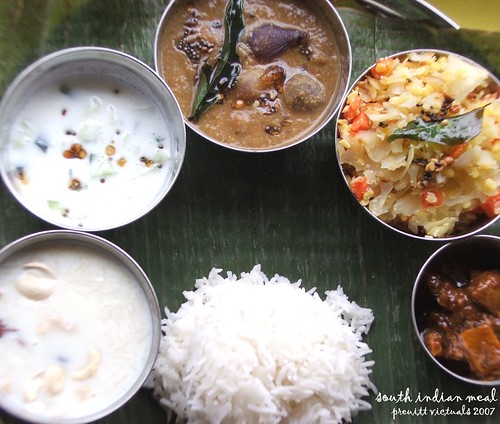
On an average day, if you dropped by to visit my parents unexpectedly, my mom would offer you a meal pretty close to the one pictured here. Perhaps not in the same presentation as above; I believe there is some unwritten rule about placement of the various dishes on a plate or banana leaf which I have not learnt well yet.

Of course, on a festival day, or if you called ahead, the meal above would pale in comparison to the one she would offer then:)

When I read about RCI - Regional Cuisine of India event, I was quite excited as this month's featured region was Tamil Nadu. There are so many distinct flavors just from this region alone, and all of them incredibly mouth-watering, but, I decided to fall back on my favorite comfort food, the food I grew up with, the food my mom would make on an average day...

The picture above shows, from left bottom clockwise: paal paisam, thayir pachadi, arachu vitta sambar, cabbage koottu and home-made chili-lime pickle. Plus, of course, rice.

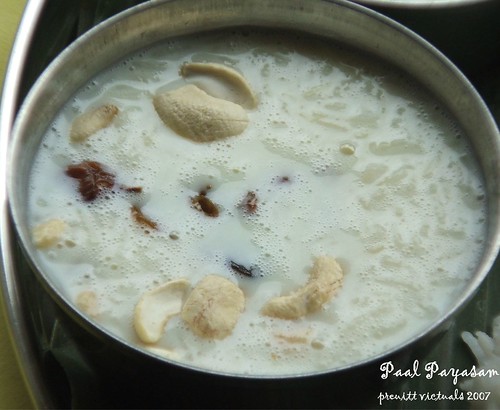
Paal Paisam

Paal Paisam: This is basically a simple kheer recipe made with milk, sugar and rice, cooked together till well thickened and syrupy. I usually take a short-cut when I make this: 1 cup jasmine rice cooked in 3 cups water, and when rice is done, add 1 can of condensed milk and 1 cup of whole milk and let them cook till well combined and as thick as you prefer. Garnish with raisins and cashew nuts, preferably fried in ghee. Serve at room temperature.

Thayir Pachadi:This is a side usually, made with yogurt, grated or finely diced cucumber, salt and some tempering. There are several versions of it that I hope to make a separate post on just thayir pachadis someday :)

Cabbage Koottu

Cabbage Koottu: The cabbage koottu is pretty much the same recipe as green papaya koottu - just replace green papaya with cabbage:)

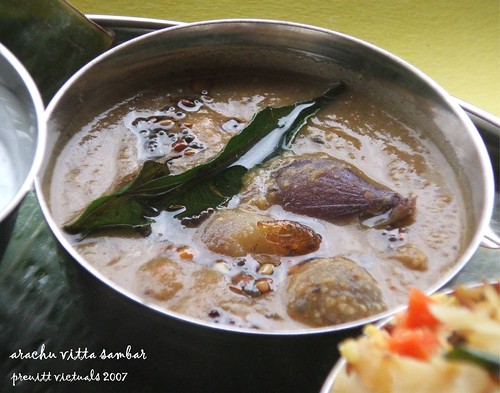
Arachu Vitta Sambar: roughly translates to sambar or stew that has some ground spice paste adding the flavor. I saved the best for the last here, as arachu vitta sambar is one of my favorites to eat with plain rice. It is similar to regular sambar recipe, except, this uses a ground spice paste rather than spice powder for the flavoring.

Arachu Vitta Sambar with Pearl Onion


A few different vegetables can be used to make arachu vitta sambar, but my favorite is made with red pearl onions.

Ingredients
12-15 small pearl onions, whole, peeled
salt to taste
1½ cups cooked toor dal
2 Tbsp tamarind concentrate*
1 Tbsp brown sugar¹

for the spice paste:
¼ cup coriander seeds
¼ cup dry grated coconut (or fresh)
2 Tbsp chana dal
4-6 dry red chilies

Tempering: 1 Tbsp canola oil, 1 tsp urad dal, 1 tsp mustard seeds, 4-6 curry leaves

*there are so many varieties of packaged tamarind product available these days, each varying in strength, price and consistency; the Vietnamese tamarind concentrate is my favorite and is the one used in this recipe, but tamarind paste is available at Indian stores which is more intense and thick than the Vietnamese one I prefer; of course, if handy, i always prefer to use tamarind fruit, just shell one or two pods, soak the pulp in water, remove the tamarind seeds, and extract the "juice" :) Experimenting with different versions helped me settle on which one I like, and how much to use to suit my taste...

Preparation

place the whole peeled pearl onions in a pot with 6 cups of water, some salt, tamarind and cook till onions lose the raw flavor

meanwhile, dry toast the spice paste ingredients till aromatic, then combine them in a blender or food processor and grind to a fine smooth paste, adding just enough water to make a smooth paste

when pearl onions are cooked add the spice paste mix, cooked toor dal, brown sugar, adjust salt to taste and let it simmer till flavors meld and the sambar is thicker; garnish with tempering

Tempering: heat oil in a pan, when shimmering, add the urad dal, when it turns golden brown add the mustard seeds, and when they pop add the curry leaves and turn off heat

Stir well before serving with fresh plain hot rice.

¹ Many of my friends and family leave out the brown sugar in the sambar recipe. In fact, in some households it is a strict no-no to add brown sugar or jaggery to sambar and rasam. I have always done it - ever since I found out I like the taste that a hint of brown sugar adds to spicy dishes :P

Labels: , , , , ,

Saturday, April 07, 2007

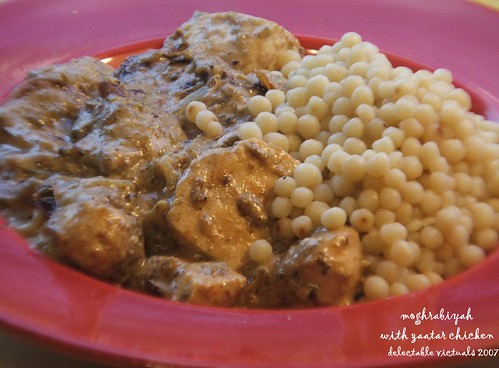
moghrabiyah with zaatar chicken


I usually make some simple falafel, tabbouleh, dolmas, baba ghanouj, hummus and such, but, Meeta's Monthly Mingle theme "Arabian Nights" got me interested in making something different, something rare at my table, and I promptly went to Ya Hala store to get some supplies.

Ya Hala restaurant is in SE Portland. We've been there only a couple of times, despite enjoying the food a lot. We rarely eat out, especially after the wee one arrived. The restaurant has a grocery store next door, which is where I went to get some ready-made Zaatar and Moghrabiyah.

Zaatar, to me, in concept, is like Garam Masala: each family, each chef, has their own special proportion of spices so that, despite using the same ingredients, each batch can turn out different. Zaatar is a mixture of thyme, sumac, sesame seeds usually, and possibly some marjoram or fennel. Sumac gives it some tang, and thyme is usually the prominent flavor.


Moghrabiyah (mougrabiya, moghrabieh) is basically pasta: it is made of durum wheat and is usually sold as little round pearls/pellets, aproximately the size of tapioca pearls. It is cooked just like pasta or cous cous, in salted boiling water, until tender.


Ingredients
2-3 boneless skinless chicken breast
½ cup green zaatar (reserve some for rub, rest for cooking)
salt to taste
2 Tbsp oil
1 medium onion, sliced
1-2 green chilies, diced finely
1 medium leek, cleaned and chopped
6-8 pearl onions, peeled, whole (optional)
1 cup plain thick yogurt

½ cup dry moghrabiyah
1 cup water or vegetable/chicken stock, hot

Preparation

toast the moghrabiyah in a pan, and then add it to the measured hot water, and boil on medium low till all water is absorbed and it feels cooked to your taste; or, simply follow the package directions; cover and keep warm

rub the chicken breasts, with some zaatar, add some lemon juice and salt and let it marinate for an hour or so; then cut the chicken breasts into bite-sized pieces

heat 1 Tbsp oil in a pan, sauté the pearl onions (if using) with a pinch of salt and zaatar; set aside

heat 2 Tbsp oil in a pan, add the onions, chilies and leeks, a pinch of salt, and sauté for a bit, then throw in the chicken pieces, add more zaatar and cook till chicken is done; then fold in the yogurt off heat

Serve the zaatar flavored chicken with the moghrabiyah, or rice, or roti.

I am glad I came across Monthly Mingle, else I would not have thought of making this dish at home.

Labels: , , , , , ,

Monday, November 27, 2006

Cranberry Pearl Onion Sambar

Cranberry Pearl Onion Sambar south indian vegetarian

Sambar, along with rice, is a dish I grew up eating pretty much at every meal about 90% of the time. I like the variety involved: add veggies in season, vary the spices a bit, omit the toor dal to make 'vatral kuzhambu' (aka vetha kozhambu), add coconut-coriander-seeds-dry-red-chilies paste to make 'araichu vitta sambar' and so on.

Sambar, in general, uses cooked toor dal, sambar powder and tamarind. As I ran out of toor dal at home, I used brown lentils and was quite happy with the results: it had the body and flavor of sambar, the heartiness of dal, tartness from the cranberries and a nice rich brown color from the brown lentils.

This recipe here is quite unconventional, so, probably my mom would not appreciate it as much :-)


Ingredients
1 cup fresh cranberries
6-8 pearl onions, peeled whole
1 cup chopped carrots (optional)
2 cups cooked brown lentils, coarsely mashed
2 Tbsp tamarind concentrate*
1/2 tsp asafoetida powder (optional)
1 Tbsp brown sugar
3-4 Tbsp sambar powder** (either make at home, or use store-bought)
salt to taste
5 cups of water
coriander and curry leaves for garnish
2 Tbsp canola oil (or any oil)
tempering: 1 tsp each urad dal and mustard seeds
---------------
* tamarind concentrate that i use in my recipes is found in asian stores - sometimes sold as sour soup mix - here is a picture of what i use
-----------------------
** sambar powder spices (this is a slightly non-traditional mix)
1 cup coriander seeds
1 cup dry red chilies
1/2 cup chana dal
1/2 cup toor dal
1/8 cup fenugreek seeds
2 Tbsp whole black pepper
2 2" piece of chinese/indian cinnamon bark
1 tsp poppy seeds
1 cup curry leaves (optional)

Preparation
  1. if making sambar powder at home, dry roast all the sambar powder ingredients, one at a time;combine them and grind them to a fine powder and set aside; can double the quantities and store the sambar powder in airtight containers, or even vary the proportion a bit to get a slightly different flavor - primary ingredients are coriander seeds and dry red chilies and the two dals, the rest is more to suit individual tastes; and from what my mom taught me: try to use (a) equal quantities of coriander seeds and dry red chilies; (b) equal quantities of the dals; BUT, ratio of (a):(b) is 2:1
  2. heat the oil in a cooking pot, add the tempering: urad dal first and when it starts turning light brown add the mustard; when mustard seeds splutter and die down add the pearl onions, carrots and asafoetida powder and sautee for a bit
  3. add the tamarind concentrate and water, a little salt, sambar powder, cover and let it cook over medium-low till onions are cooked, and it reduces a bit; sambar can be thick or thin - i prefer it thick and hearty; if making it thin, add more water and adjust spices so it doesn't feel dilute and bland
  4. add brown sugar, cranberries and cooked lentils; simmer on medium-low heat till flavors meld and cranberries are cooked but not mushy; adjust salt to taste
  5. off heat, garnish with coriander and curry leaves; alternately, the curry leaves can be added at the tempering stage itself to render it slightly crispy, and infused with sambar flavors
  6. serve warm with rice and sides such as snake gourd, snake beans and zuccini or even a simple potato dish.

Labels: , , , , ,

‹Older